• +228 872 4444
  • +775 872 4444
  • contact@email.com
Arya Kshema Winter Debates
  • Home
Sign In

Day 8: Commitment to Study, the Fourth Good Deed, Travels and Miracles

Jacek Rosa 2021 Arya Kshema 02 September 2026

Arya Kshema Spring Dharma Teachings:

17th Gyalwang Karmapa on The Life of the Eighth Karmapa Mikyö Dorje

February 25, 2021

At the very beginning of these teachings, the Karmapa emphasised how important it is to know the origins of the tradition to which you belong. As such, these current teachings are highly significant for the Kagyu tradition. Much of this extensive material is original research by His Holiness and being presented publicly for the very first time. He is correcting misinformation, establishing historical facts about the early Kagyu masters and their students, and detailing aspects that had been forgotten, such as the existence of renowned Kagyu scholars and flourishing shedras. Then came the catastrophe which struck the Kagyu after the destruction of the Garchen during the time of the 10th Karmapa. For the monks and nuns listening to His Holiness’ daily exposition, much of this material is new and exciting; it has never been taught before and it is helping them to appreciate their heritage. 

On Day Eight, the Karmapa continued to share his extensive research into the history of the Kagyu lineage, bringing to life the story of the Eighth Karmapa and his teachers in extraordinary detail.  

The Authentic Guru Karma Trinleypa

The opening slide showed Mikyö Dorje’s four principal teachers—Sangye Nyenpa Rinpoche, Dülmo Tashi Öser, Chödrup Senge, and Karma Trinleypa — and the details, where known, of their births and deaths.

Karma Trinleypa was born in the Fire Bird Year, 1456 CE, so, when the Eighth Karmapa first summoned him, he was already quite old. When they finally met, after several invitations, on the 4th Day of the 11th month in the Year of the Fire Pig, (1527 CE) Karma Trinleypa would have been sixty-one years old.

It was Karma Trinleypa who advised Mikyö Dorje to receive his full ordination vows from Joden Khenchen Chödrup Senge, said to be an emanation of Arhat Angita. When the Eighth Karmapa sent a further invitation with an escort, explaining why Karma Trinleypa should come to him, Karma Trinleypa duly made his way towards the Garchen in Kongpo. On the way, he met up with Khenchen Chödrup Senge, and they travelled together.

Their first meeting with Mikyö Dorje was at Sampel Wangpo Upper Monastery at Nomtö Mountain Retreat Centre. Then, while the elderly Khenchen Chödrup Senge rested to recover from the journey, the Karmapa gave Karma Trinleypa the lung for the Six Yogas of Naropa. The astrological signs suggested that the teachings start on 22nd of the month, but the Karmapa insisted that they start earlier on the 17th, so Karma Trinleypa began teaching Mikyö Dorje Prajnaparamita on that day instead.

A week later, on 22nd, Mikyö Dorje took full ordination vows: Khenchen Chödrup Senge was the khenpo, Karma Trinleypa was the ritual master, Gampo Khenchen Shakya Sangpo was the private questioner, Sangpu Chöje Shakya Sangpo was the timekeeper, and the Chöje of Gendun Gang Deshong with the necessary number of bhikshus from the four monasteries completed the quorum. 

Mikyö Dorje’s studies with Karma Trinleypa resumed on the 23rd;  in the morning, he studied  Prajnaparamita, and  Abhidharma in the afternoon. As the study schedule progressed, Karma Trinleypa offered teachings on the Sublime Continuum, Differentiating the Middle from Extremes and Differentiating Dharmas and Dharmata, the Compendium of Validity, the Commentary on Validity, the Treasury of Valid Logic, the Pratimoksha Sutra, the Vinaya Sutra, the Compendium of Abhidharma, Entering the Middle Way, and other texts. He gave a detailed teaching on the precepts of the vinaya as explained by Nyakpuwa, including the Rituals of Motions [by which the sangha makes decisions and conducts its business] and the practice of the Three Foundational Rituals [sojong, yarney (the rainy season retreat), and  gakye (the ritual which releases monastics from the bounds of the rainy season retreat)]

Karma Trinleypa gave Mikyö Dorje instruction in the three types of vow: the Bodhisattva Vow of aspirational and engaged bodhichitta according to Sakya Pandita’s Great Bodhichitta, the pratimoksha vows, and tantric vows.

Karma Trinleypa explained the precepts of the vinaya very clearly so that even today, the observation of the Three Foundation Rituals in monastic communities is based on his instructions, as are the lay vows and the eight fasting vows. The teachings he received on tantra mainly came from the Sublime Continuum.[Uttaratantra].  He gave him the complete four empowerments and tantric vows of the Nine Deities of Hevajra according to the Sixth Karmapa Tongwa Dönden’s ritual texts, and taught him the mandalas, mudras, and melodies. He taught Mikyö Dorje the Kalachakra tradition, the five types of sandhi (Sanskrit grammar), and all the profound dharma passed down from the Seventh Karmapa Chödrak Gyatso that Mikyö Dorje had not yet received. He gave him instructions on the yidam deities of  Vajravarahi, initiations and sadhanas of Manjushri and White Tara, and the One Hundred Long Life Empowerments from the tradition of Machik Druppay Gyalmo, which is the version most frequently given in the Karma Kagyu tradition. 

In this way, over the course of three years, Mikyö Dorje became a scholar. According to His Holiness’ calculations, the actual time spent studying was only 14 months. How was this vast curriculum covered in such a short time? Basically, through Mikyö Dorje’s exceptional diligence and single-mindedness towards his studies.  The teachings lasted from sunrise to sunset, punctuated by audiences and meetings, and Mikyö Dorje took less sleep so that he could use the night hours for memorising the texts.  Initially, there were three teaching sessions per day but Mikyö Dorje asked for it to be increased to six or seven sessions. Karma Trinleypa was reluctant to do this at first, but once it was obvious that Mikyö Dorje was able to retain both the words and the meaning without any difficulty, he increased the sessions to six a day. 

They observed the usual protocols before each session; Mikyö Dorje, as the student, would rise when Karma Trinleypa entered the room, ask after his health, prostrate, and prepare his seat to show respect, but no time was wasted in small talk. Whenever Karma Trinleypa digressed, Mikyö Dorje would prompt him, “This is the point we got to. Please continue from there.” 

During the six sessions, they studied the texts, the explanation of the text, and the explanation of the meaning. If Mikyö Dorje could not understand something, instead of pretending he did or thinking that he would learn it later, he would immediately try to resolve his doubt. He ate less food so as not to become lethargic, and drank less tea so that he didn’t need bathroom breaks. He also wore fewer clothes, in order to  stay alert.

For one whole year, they studied continuously, without missing a single day, His Holiness commented. Later, people said that Mikyö Dorje must have recognised certain qualities in Karma Trinleypa.

Finally, the time came when Karma Trinleypa had to leave, but there were still a few texts left to be studied, so Mikyö Dorje accompanied him on his journey, and Karma Trinleypa continued to teach him as they travelled. Mikyö Dorje accompanied him as far as Drakchi. On the 3rd day of the first month of the Ox Year [1529 CE], Karma Trinleypa made vast offerings for Mikyö Dorje’s long life and also offered a new long-life prayer and a list of offerings that were read aloud in the gathering. However, Mikyö Dorje and Karma Trinleypa were so reluctant to part company that they postponed. Eventually, Karma Trinleypa departed on the 11th.  Master and student prostrated in farewell, touched heads, and made aspirations. At that time, Mikyö Dorje said, “Please be my spiritual friend until I reach enlightenment.” 

The histories relate how the attendants and entourage were amazed at the way the Karmapa praised, exalted, and respected Karma Trinleypa. The commentaries that Mikyö Dorje later wrote on the great texts of the Prajnaparamita, the Middle Way, and  Abhidharma contain prayers, supplications and praises of Karma Trinleypa– the guru who had taught him the explanations of the texts. We need to remember and learn from this example of the authentic guru and student, His Holiness concluded.

The Eighth Karmapa’s Education Continues

From Mikyö Dorje’s viewpoint, there was no end to listening and contemplation. When he travelled, from Kham to Central Tibet, if he found an authentic guru, no matter which tradition they belonged to, whether they were Sakya, Geluk, Drikung, Jonang, Shalpa, or Nyingma, he sought teachings. In particular, he was looking for clarification on Kalachakra. Ja Jamyang Tashi Namgyal and Panchen Dorgyal, a student of Panchen Shakya Chokden, were said to be the most knowledgeable at that time, so Mikyö Dorje invited them. Panchen Dorgyal agreed to come, but Mikyö Dorje had a vision that the interdependent circumstances were not right and put a halt to the invitation.

Later, when Mikyö Dorje went to Drikung, Panchen Dorgyal was there, leading the discussions which were part of the welcome ceremony.  Mikyö Dorje joined in the debate by proxy through Pawo Tsuglak. 

His first question to Panchen Dorgyal asked about the differences between the eighteen schools cited in Sakya Pandita’s Treatise on the Three Vows. Panchen Dorgyal  answered rather grandly in a loud voice, ”There are many different schools among the Exposition schools that we know from the Abidharma, Middle Way and texts on Validity.”  When Mikyö Dorje contested his answer,  and asked again for the differences between the eighteen different schools, which included both Exposition and Sutra schools, Panchen Dorgyal  gave a very long answer but there was no main point to it. So Mikyö Dorje rechallenged him, and, in a quivering voice, Panchen Dorgyal admitted that he had nothing to say. Mikyö Dorje then succinctly answered his own question:

It is said that the Exposition does not accept self-awareness, the Sutra school does, the Mind Only assert that self-awareness exists ultimately, the Middle Way refutes self-awareness, and in tantra one is said to awaken because of self-awareness.

He then posed a second question, “What are the differences between these different schools’ positions on self-awareness?” Panchen Dorgyal attempted a reply, but floundered on, talking about  “apprehended images” and “apprehending images”. Mikyö Dorje challenged him, “Well, are you saying you do not know the differences between those self-awarenesses?” And in a very subdued voice, Panchen Dorgyal admitted this.

Later, Panchen Dorgyal confessed to Pawo Tsuglak Trengwa that he had spent day and night studying and reviewing in preparation for the Karmapa’s arrival, but the Karmapa hadn not questioned him on any of those texts. “He must be clairvoyant,” he concluded.

Panchen Dorje Dorgyal submitted seven scrolls of very subtle questions to the Karmapa. The Karmapa successfully contested his views, but he maintained respect for Panchen Dorgyal. 

Because he wanted to study Kalachakra, Mikyö Dorje invited the authority at that time, Jamyang Tashi Namgyal. He was unable to come but sent two hundred rare and well-edited texts for the Karmapa to study. Mikyö Dorje wanted to study with other scholars; however, he failed to find any equal to Karma Trinleypa.

At this point His Holiness reflected briefly on his own experience of trying to get an education equivalent to a shedra education. 

Mikyö Dorje had a great interest in texts, and he was able to acquire many rare texts.  He received innumerable volumes of commentaries on the sutras and tantras, and he would spend all night reading and memorising them. He would mark the outlines in red and the root text and citations in yellow. If there was a subtle point about the text that was not clear to him, he would write in small letters that he had not understood this point or that he needed to look at such-and-such a text. If a point was extremely difficult, he made annotations about different interpretations in different commentaries. He would ask other learned scholars about the meaning of the text. If there were a point he regarded as very important, he would make a special note of it and use this to resolve any doubts he might have. 

When memorising important texts such as the Treasury of Valid Logic and its commentary or the commentaries on the higher and lower Abhidharma, he would recite them from 10.00 pm at night until 3.00 am. He continued this practice for many years. 

In addition, he studied the grammars by Kalapa and Candragomi, metaphors, composition and the Sanskrit and Tibetan writing systems with Karma Lotsawa Rinchen Tashi. He studied Indian and Tibetan texts on validity with Kongtön Shakya Rinchen, Tsangtön Dorje Sangpo, Ngaripa Lekpay Gocha, and others. He received teachings from Pawo Tsuglak Trengwa on the Compendium of Astrology by Rangjung Dorje and Compositions that Please the Learned. He respected all scholars or people with qualities and spoke of them as more precious than gold,  ‘the eyes of prajna”.

According to Pawo Tsuglak Trengwa, the Eighth Karmapa was able to defeat even scholars whose knowledge and understanding were said to be unrivalled. Nevertheless, he would say humbly, without any pretension, “I have little intelligence and little education, so I know nothing.”  

The Karmapa concluded:

In summary, with love for deluded beings and great reverence for the precious teachings, Mikyö Dorje accepted great hardships and difficulties to study with his gurus. Whatever experience arose from his listening, contemplating, and meditation, without hiding any or being miserly, he would teach dharma appropriate to the abilities of those who sought it, without delay. This is one of the most important of Mikyö Dorje’s deeds. 

Directly addressing the shedra students, the Karmapa emphasised that the practice of previous gurus should be an example so that we can benefit sentient beings and serve the teachings. We need to listen and contemplate in order to get experience. Our foremost thought should always be how to benefit suffering beings and never our own self-aggrandisement. This is the function of a shedra education.

The Fourth Good Deed :  “Abandoning meaningless distractions.”

The first section of the Autobriographical Verses, on How to Enter the Dharma, has six points. This is the fourth:

When I developed certainty from the bottom of my heart
That ordinary distractions are merely ways to waste this life, 
I cast away all commonplace diversions. 
My awareness became clear; I found conviction in the Jewels.
I think of this as one of my good deeds. (4)

Mikyö Dorje’s Instructions on Training in Liberation Stories reads:

One must follow the guru without ever being separate from them. How long must one follow the guru? Until you achieve buddhahood. But to follow the guru in that way, you must have the fortune to be in a time and place similar to the gurus, the spiritual friends, and a body and mind of the same kind. Once you have achieved that superior basis, you must be free of obstacles and have the favourable conditions that permit following the guru and the dharma. 

That depends on gathering virtuous karma for that sake, such as having faith in the guru and the true dharma, and then diligence, mindfulness, samadhi, and prajna. Therefore, you must eliminate the impediments to virtue—conditions that create afflictions, places and friends that are especially pleasant or unpleasant, and cognitions that want, crave for, or hate those. If you can eliminate ordinary distractions for such purposes and distractions of thinking about methods for greatness and wealth in this life and then find solitude of body, speech, and mind, your mind will become workable and your awareness clear. Prajna will ripen and you will remember the qualities of the Three Jewels. When you remember that, you will feel that if you use your body, speech, and mind for pointless acts for even an instant, it is more precious than your life.  Practice one-pointedly with that feeling. 

His Holiness commented that when we follow a guru, we need to follow them, without being separated, until we achieve buddhahood. In order to follow that guru, we need the merit and we need to receive dharma teachings. In order to do that we need the basis of a body and mind, and for that, we must gather the accumulations.  The precious human life—human body with leisures and resources— is dependent on finding the teachings from an authentic spiritual friend and practising them. There are many impediments and obstructions, the worst of which are the afflictions in our own being–thoughts of greed and hatred.  If we want to overcome obstacles, it’s not necessary to perform obstacle-removing rituals to remove an external problem. We have to work on our own mind and eliminate all the afflictive thoughts. We are constantly being fooled by the eight worldly concerns. With our body, we should see if we can stay in a solitary space. With our speech, we should avoid meaningless speech and remain silent. And instead of our mind being distracted continuously, we should see if it can rest peacefully. If we practice these, our minds will go in a virtuous direction. Our awareness will become clear, and our intelligence will increase. If we use our body, speech and mind for the eight worldly dharmas, we will waste our lives; we need to use them purposefully to give our human life meaning and to practise the true dharma. 

Mikyö Dorje was never fooled by these distractions. What is the evidence?  Although he could have extended his power and influence through his relationship with the King of Jiang or the Ming Emperor, Mikyö Dorje never sought to do this.

Mikyö Dorje was highly regarded and greatly respected. The Garchen [Great Encampment] was known as “The Ornament of the World” and was the most influential organisation in Tibet at that time. Karma Kagyu lamas, monasteries, and so forth filled all areas of Tibet, so the Karma Kagyu was very powerful in terms of both dharma and politics. Tibetans and other people considered the Karmapa to be the greatest lama. But he did not like being great and impressive, using his power, trying to increase the influence of his sect, and so forth. Not only that, he did whatever he could to prevent that from occurring. 

The First Meeting Between the King of Jiang and the Karmapa

Jiang was a minor kingdom which arose in the border regions between Tibet and China. During the time of the Tibetan empire, the histories mention Jiang. It came under Tibetan rule several times, particularly during the time of King Düsong Mangpo. (Manuscripts from Dunhuang date the birth of Düsong Mangpo  to 676 CE) He invaded Jiang and annexed it. During the time of the Mongol Emperor,Kublai Khan, it was part of Yunnan. In 1381, during the Ming dynasty, the Ming armies invaded Yunnan. The Jiang were given the clan name ‘Mu’ by the Ming emperor. 

The King of Jiang had invited the Seventh Karmapa, Chödrak Gyatso, but he was unable to go. The 13thKing of Jiang, Aya Aqiu, invited  the Eighth Karmapa shortly after his enthronement. At that time the king controlled many regions in Kham, and he sent Lama Tashi from Jiang with a letter of invitation to the seven-year old Karmapa. Travelling with the Garchen, Mikyö Dorje made his way across Kham, visiting Karma Gön and Kampo Nenang. He then went to Gyaltang [modern-day Shangri in Yunnan], and from there to Jiang, where the Garchen set up camp near the Satam Palace. An elephant, part of the military escort, broke free, went to the Karmapa’s tent, bowed his head, and raised his trunk in respect.

The palace of the King Of Jiang survives to this day and the Karmapa was able to show four slides of its central pagoda  surrounded by other lower buildings.

At dawn, the King of Jiang himself came in a great procession to greet the Karmapa. The king was carried in a palanquin,  accompanied by his uncle and younger brothers who rode elephants. The king got out of the palanquin at the Karmapa’s tent, prostrated. Another elephant  appeared and bowed its head, and then began trumpeting very loudly. They asked the mahout why, and he replied, “He is really happy that the Buddha has come to see him.” There were other miraculous signs: rainbows and a rain of flowers.

Mikyö Dorje presented gifts of statues, sutras and sacred relics, and Tibetan horses.

Each evening traditional musicians played outside the encampment.

An escort and a palanquin arrived to take him to a reception in the palace. Out of respect, the King met him at the middle gate [the main entrance] and offered a khata. Chinese monks played music and they beat a huge drum which required sixteen people to beat it. Mikyö Dorje sat on a golden throne. Tea was served, offerings of silk brocades and so on were made. The three queens took off their jewellery and offered it to the Karmapa. Then Mikyö Dorje bestowed the Boddhisattva Vows.  The next day he was invited to the palace again.

There were many good outcomes from this meeting. At that time, the King of Jiang was involved in various conflicts, but he agreed not to wage war with Tibet for fifteen years. The indigenous religion in Jiang was similar to the old form of Tibetan Bön and involved animal sacrifice. After Mikyö Dorje’s visit, the king gained an unshakeable faith in Buddhism. He promised to send 500 people to become monks and to build 100 monasteries.  Finally, it was probably because the Eighth  Karmapa had made the connection that the 10thKarmapa, Chöying  Dorje, and other Kagyu lamas were able to seek refuge there.

The Jiang king hoped that Mikyö Dorje would remain in Jiang, but, after a week, he started on his way back to Tibet. The Karmapa promised that he would return after seven years, but for some reason was unable to. However, years later Jiang would become a place of refuge for the Karma Kagyu.


Click the photo to view photo album:
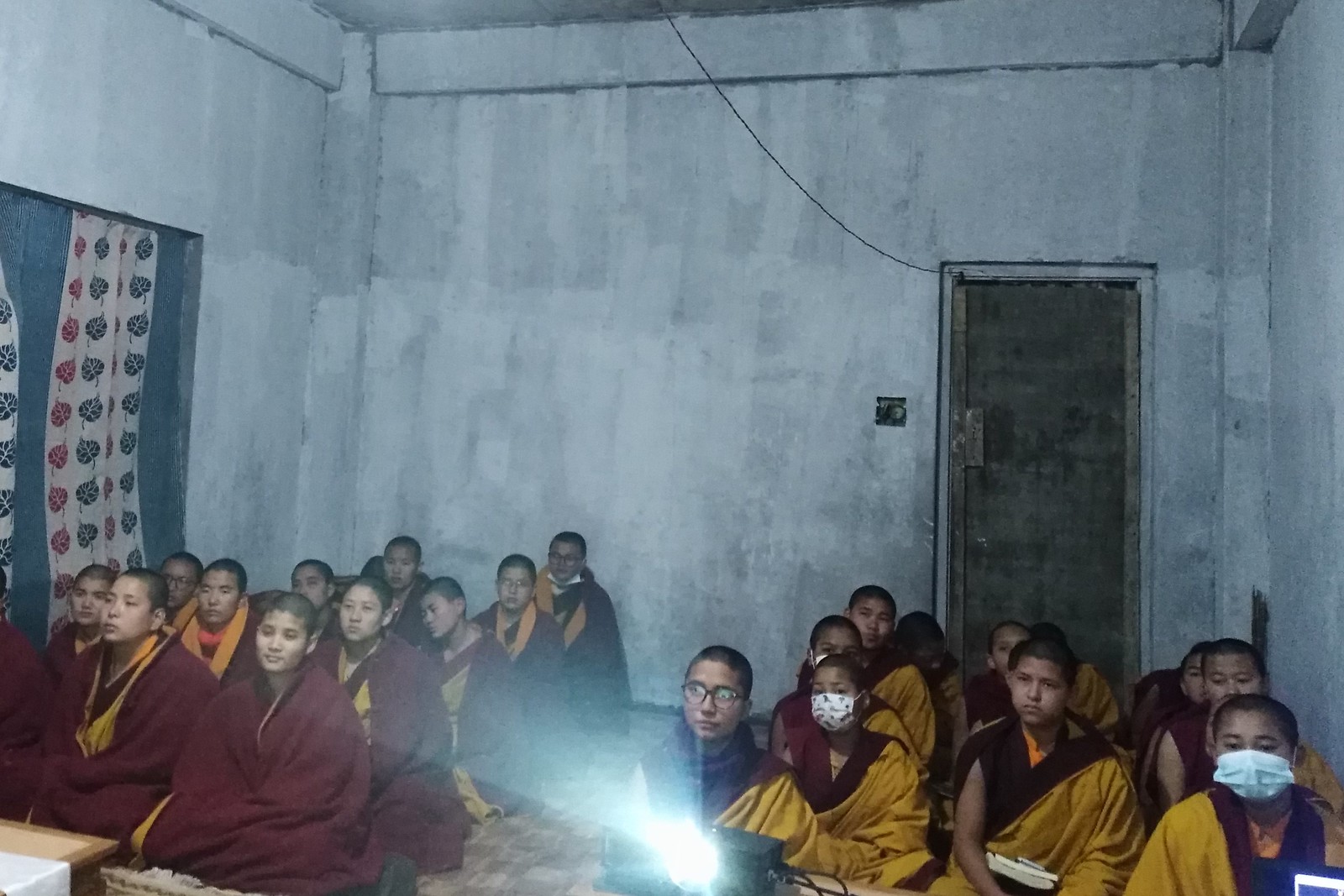
2021.02.25 Day 8: Commitment to Study, the Fourth Good Deed, Travels and Miracles


Day 9: The Fifth Karmapa Deshin Shekpa and the Ming Emperor Yongle 

Jacek Rosa 2021 Arya Kshema 02 September 2026

Arya Kshema Spring Dharma Teachings:

Gyalwang Karmapa on The Life of the Eighth Karmapa Mikyö Dorje

February 26, 2021

His Holiness sent his auspicious greetings to today’s audience and extended a particularly warm and joyous welcome to the Kagyu Samye Dzong Lubumbashi community, which has joined the teachings every day from the Democratic Republic of the Congo. Delighting in their practice of the Dharma, His Holiness has taken an interest in their community, noting their very good pronunciation of Tibetan while reciting the Twenty-One Praises of Tara. Additionally, many Tibetans, who, like him, have seen their videos online, have praised their effort and practice. 

Kagyu Samye Dzong Lumbumbashi is affiliated with Akong Rinpoche, whose sudden passing in 2013 saddened His Holiness and was a great blow to Akong Rinpoche’s students. His Holiness told listeners that, before his enthronement as Karmapa, he met Akong Rinpoche and so had known Akong Rinpoche well from the time he was young. Akong Rinpoche helped many poor and disadvantaged people as well as supporting over 300 schools in Tibet. His Holiness said it was his responsibility to locate Rinpoche’s tulku and that he would try his hardest to find him soon. He then offered his greetings again to Kagyu Samye Dzong Lubumbashi, assured them he is rejoicing in the work that they have done, and, as French rather than English is one of their languages, he concluded, “Merci beaucoup”. 

Part 1: The Root of our Problems Cannot be Found Outside Ourselves

Having reached the fourth stanza of The Praise “He Searched Thoroughly”, His Holiness read the root text:

He realized from his heart—not just in words—
How this life’s wealth and fame are devoid of meaning.
He exemplified revulsion and a lack of craving
And recalled the futility—to him I pray

According to the Fifth Shamar Könchok Yenlak’s annotated commentary, the meaning of this stanza is that Mikyö Dorje was not attached to this life. The Eighth Karmapa understood that all of the good things, such as happiness and friends, of the three realms of samsara are unnecessary and pointless. By remembering this, one does not crave or desire such things. Instead, His Holiness said, it is vital to be content with ordinary resources such as food and clothing. He then referred to the previous day’s teaching on the Fourth Great Deed, which has the same meaning as this stanza.

A story was then told of a person listening to a teaching about “good things”. During the teaching, it was said that the reason we are suffering in samsara is because we’re deceived by all of the good things within it. Because the good things in samsara are actually bad, we should be unattached to them. Now this person had a friend whose name happened to be “Good Things” (Sipay Phuntsok), so when he heard that all “good things” in samsara are bad, he began thinking, “My friend Good Things is giving me problems”. He confused the “good things” of samsara with his friend named “Good Things”. After the teaching, he went up to his friend Good Things and beat and punched him really hard! The friend had no idea what was going on! 

While we may laugh at this story, there is a serious point His Holiness asked listeners to consider. Similar to this person who believed the good things of samsara were outside of himself, we too tend to think that all of our problems and difficulties come from outside of ourselves. Looking outside is the same as looking for a guy named “Good Things” and beating him up, said His Holiness. However, the root of our problems cannot be found outside. Instead, we need to look inside ourselves. To do this, we need the eye of prajna. Just as we need a mirror to see our own face, we need the eye of prajna to see our faults, situations, and problems.

Part 2: The Ming Emperor Yongle invites the Fifth Karmapa Deshin Shekpa to China

Yesterday, His Holiness spoke about how MIkyö Dorje was invited to Jiang by the 13th King of LIjiang Mu Ding. Mikyö Dorje was also invited to China by the Ming Emperor, who sent an envoy when the Karmapa was but 14 years old. This history will be discussed later. For today’s teaching, His Holiness noted that Mikyö Dorje was not the first Karmapa to be invited to China. Instead, he highlighted the historical precedent of Ming Emperors issuing decrees and invitations to Karmapas prior to the Eighth. 

By examining Karma Kamtsang histories, His Holiness examined the dharma relationship formed between the third Ming Emperor, Yong le, and the Fifth Karmapa Deshin Shekpa. From a Ming Dynasty writing entitled the Tales of Four Brothers, When he was young, Yongle heard of a guru Karmapa in Ü-Tsang who was unlike any other. Therefore, in the first year of his reign and with his queen’s encouragement, Yongle sent his Inner Minister, the Tibetan eunuch Gönpo Sherap, with a decree inviting the Karmapa to China. 

Deshin Shekpa was born in the region of Niandang (present-day Gongbu Jiangda County, Linzhi) in the Male Wood Rat Year (1384). Khenchen Lodrö Gyaltsen recognized the young Deshin Shekpa as the reincarnation of the previous Karmapa Rolpay Dorje. Deshin Shekpa took his full ordination vows, probably when he was around 19 years old, with Khenchen Sönam Sangpo of Gendun Gang, who was said to be an emanation of one of the 16 Arhats. It is said that when he took vows, there were over 80 monks in the assembly. Tibetan history has named this ordination as the one with the largest and purest sangha. 

Deshin Shekpa’s many teachers included: Khenchen Sönam Sangpo; Kashipa Rinchen Pal; Gui Gungpa Rinchen Pal; Khenchen Gyaltsen Pal; Khenchen Yönten Lodrö; and Gya Sangye Wangchuk. Gui Gungpa Rinchen Pal had studied at the first Tibetan shedra, Sangpu, and because he had passed the debate exam in four different texts, he was known as kashipa (=a master of four texts or treatises). The Karmapa invited this kashipa to the encampment and studied the scriptures in-depth with him. The other teacher, Khenchen Sönam Sangpo, wrote praises about Deshin Shekpa and was said to have great faith in him. Deshin Shekpa passed away at the age of 32 in the Female Sheep Year (1415) at the Potala Palace in Lhasa; his collected works are no more than one slim volume but His Holiness said these works are very elegant, having been written in a charming style. 

In Pawo Tsuklag Trengwa’s Feast of Scholars, Yongle’s decree is recorded to have included words of invitation akin to this effect:

I heard of your name before when I was in the North and thought I should invite you then. Now that I have ascended to the throne as Emperor, I would like to bring peace to the kingdom and I have been thinking for a long time that we should together bring good fortune to all people…You are inseparable from the Buddha’s intentions, so you should come to China and spread the teachings in order to benefit the kingdom. Also, my mother and father have passed away. I thought I should do something to repay their kindness but have not found a way. As you are skilled in means and activity, please perform rituals to benefit the deceased. Please come quickly. 

The Karmapa arrived in the Chinese capital Nanjing five years later in the twelfth lunar month, when he was 22 years old. The Ming Emperor named the Fifth Karmapa Rúlái Dà Bǎo Fǎwáng, which translated into Tibetan is Deshin Shekpa Rinpoche Chökyi Gyalpo, the name by which the Fifth Karmapa is known today (in English, his name means “Precious King of Dharma”). His Holiness’ slide included an old painting of the Ming Emperor wearing a resplendent yellow-golden robe and black cap, and a modern 3D computer-generated image of the Emperor’s face. There are probably over 20,000 words recording the Ming Emperor Yongle and the Fifth Karmapa Deshin Shekpa’s meeting, which possibly makes it the most written about any Tibetan lama in Chinese historical records. 

Part 3: Yongle Greets the Fifth Karmapa Deshin Shekpa

Against his ministers' advice, the Ming Emperor Yongle received the Karmapa in-person upon his arrival in Nanjing, with his palms joined and with great respect. Thousands of people and monks gathered to witness the event, elaborate feasts were prepared, and gifts including 10,000 sang of gold, 2000 sang of silver, and ritual items were given in the Huakai Audience Hall. Amazing signs were said to have occurred. This meeting of the experienced, older political leader and the younger dharma leader was certainly impactful; 200 years later, a Chinese pilgrim referred to the event in one of his writings, indicating that even centuries later people were still learning about and recalling Yongle and Deshin Shekpa’s meeting. 

The Wondrous Decree “Tathagata Precious King of Dharma, Great Maitreya of the West, Peaceful Lord Buddha, and Master of All Buddhist Teachings on Earth” chronicled the events of Deshin Shekpa’s visit to Nanjing. Miracles such as rains of flowers were reported. On the eighteenth day of the second month, Deshin Shekpa performed a purification ritual for the Emperor’s deceased parents and for the soldiers who died in the war that established the Ming Dynasty. This and other grand rituals were held at Linggu temple, where Deshin Shekpa resided while in the capital. Because the Ming Emperor offered Linggu temple to Deshin Shekpa, the temple became a Karma Kagyu monastery for some time. The Wondrous Decree is now housed in the Library in the Tibetan Autonomous Region, and His Holiness, with the contribution of his painting master from Taiwan, has reproduced some of the text and a painting which were shown to today’s audience. His Holiness copied the Tibetan calligraphy while his painting master wrote the Chinese text.

Part 4: The Strength of Yongle and Deshin Shekpa’s Dharma Relationship 

In addition to giving the Fifth Karmapa the title “Master of All the Buddha’s Teachings on Earth With Excellent Prajna Who Has Reached Enlightenment and Is Victorious In the Ten Directions with Perfect Deeds”, Yongle also gifted him with a decree and a precious jade seal, now in a museum in the Tibetan Autonomous Region. His Holiness explained that jade was a precious material, valued more highly than gold and silver, which Tibetans usually prize greatly. 

Some ministers thought these events were auspicious, while others remained skeptical. One visitor said Deshin Shekpa looked like an ordinary person who liked to eat lamb, and was deceiving everyone with his illusions. The Emperor, however, gained even more faith in Deshin Shekpa. Twenty different letters written by Yongle to Deshin Shekpa are still extant and reveal the depth of their guru/student connection. 

Wanting to leave behind the busy-ness of the capital, on the 13th day of the third month, Deshin Shekpa travelled to Xiantong Temple on Wutai Mountain. Although the Emperor wished him to stay at Linggu monastery, he granted Deshin Shekpa the use of a carriage to bring him to Wutai Mountain and instructed a eunuch to renovate the temple as this was to be Deshin Shekpa’s living quarters while at Wutai. In the “Supplement of Great Buddhist Masters”, it was noted that the Fifth Karmapa was inclined to solitude and did not like distractions. His Holiness showed a photograph of Xiantong monastery as it currently stands.

The 17th day of the fourth month was the Emperor’s birthday; Deshin Shekpa sent relics of the Buddha and arhats to him. For the Karmapa’s birthday on the 18th day of the fifth month, the Emperor wrote a verse, which includes the line “When Deshin Shekpa arrived in the world / All was filled with light like the sun’s.” The Emperor also wrote other letters recalling ceremonies conducted at Linggu monastery. This shows that the Emperor continued to think of the Karmapa with respect and loving thoughts.

As was mentioned, the Ming Emperor Yongle and his queen had great faith in the Dharma. His Holiness told the audience that when the queen died, the Emperor wrote to Deshin Shekpa and asked him to perform the funerary rites. The queen had once had a dream in which Chenrezig was writing a sutra. Upon awakening, the queen wrote this sutra down and showed it to Deshin Shekpa to confirm its authenticity. After the queen died, the Emperor printed many copies of this sutra that the queen had seen in her dream. Likewise, the Emperor had a copy of the Kangyur printed using wood blocks and brought back to China. This became known as the Yongle Kangyur/Collected Words of the Buddha. Scholars say this was the first printing of the Kangyur in Tibet, and it occurred because of the Ming Emperor and Deshin Shekpa’s efforts. 

The Karmapa eventually asked to return to Tibet. The Emperor suggested he and Deshin Shekpa form an alliance similar to that of the Sakya and the Mongols, who had previously taken Tibet by force. Deshin Shekpa was not comfortable with the suggestion that they should wage war, and advised the Emperor that one needs to practice the dharma according to the Dharma. Yongle also suggested unifying all Tibetan Buddhist lineages into one, because having multiple lineages could lead to conflict. The Emperor offered to send his soldiers into Tibet to support Deshin Shekpa, so that Tibetans would then be forced to follow him and Deshin Shekpa would be able to meld all the lineages into one. Yongle thought they could then be governed from two seats in Tibet (an Eastern and a Western one). There could be a great Dharma festival and gathering every year. Deshin Shekpa rejected this idea as well, explaining that a single dharma lineage would not be able to tame all sentient beings. The different lineages arose from the Buddha’s great compassion, and are needed because of our very different capacities and interests. Deshin Shekpa continued to say that there is no reason to unite all lineages into one because if one practices his or her own lineage properly, that is very good. He then recommended to Yongle to give ranks, titles and gifts to all important people and great lamas in Tibet as this would ultimately be beneficial to everyone in the region. 

The Ming Emperor proceeded to send Deshin Shekpa gifts after he had returned to Tibet, and Deshin Shekpa continued to advise Yongle. Deshin Shekpa had great kindness in his heart and was not attached to fame or power. He was well-known throughout Tibet in his time, had great faith in the Dharma, and did not seek profit or fame. His intention was to bring happiness and peace to everyone. 

His Holiness promised to continue speaking about Deshin Shekpa the following session.


Click the photo to view photo album:

2021.02.26 Day 9: The Fifth Karmapa Deshin Shekpa and the Ming Emperor Yongle


Day 10: Karmapa Deshin Shekpa, Karmapa Mikyö Dorje and China

Jacek Rosa 2021 Arya Kshema 02 September 2026

Arya Kshema Spring Dharma Teachings:

17th Gyalwang Karmapa on The Life of the Eighth Karmapa Mikyö Dorje

February 27, 2021

The Karmapa began with advice for those in India and Nepal not to become too relaxed about the Covid 19 pandemic but to continue to be very careful and take precautions 

Part 1: Deshin Shekpa Travels to China

According to the histories, the Ming emperor Yongle invited the Fifth Karmapa, Deshin Shekpa, from Ütsang [which is how the Chinese documents refer to Tibet] to perform rituals for the emperor’s deceased parents, a custom which is very important in Chinese culture. During the Karmapa’s visit, the emperor also had lengthy discussions with him on political strategies he should adopt in Tibet. The emperor hoped that, with his military backing, Deshin Shekpa would assume political power and responsibility in Tibet, in the same way that Drogön Chögyal Pakpa had done during the Mongol Yuan dynasty. Kublai Khan had given Drogön Chögyal Pakpa the title “Precious King of Dharma” and the Ming Emperor now gave that same rank and title, with just some minor differences, to Deshin Shekpa 

Deshin Shekpa had no wish to accept any political power or responsibility and gave two reasons: sending a Chinese army into Tibet would only create turmoil and strife for the Tibetan people; and having many Dharma lineages in Tibet was beneficial. He requested instead that the Ming emperor give positions and titles to both secular and religious leaders of all traditions in Tibet. This the emperor did, and the Ming dynasty continued this tradition. After Deshin Shekpa returned to Tibet, the Ming emperor invited Je Tsongkhapa. Tsongkhapa, however, was unable to go, but the emperor likewise invited Jamchen Chöje of the Geluk order, Tekchen Chöje of the Sakya and so forth, giving them titles, just as he had given Deshin Shekpa. 

While Deshin Shekpa was in Nanjing, he made many suggestions to the emperor, and consequently, the emperor granted amnesties to people in prison. This is evidence of Deshin Shekpa’s great loving-kindness towards sentient beings, which he showed in his acts many times. He also fulfilled a prediction made by the Fourth Karmapa, Rolpai Dorje. This said that if a pure bhikshu were to pass away on a certain mountain and his body were to be cremated, there, there would not be war between China and India. Eventually, Deshin Shekpa passed away on that very same mountain and his body was cremated there; because of which his successor was able to go to India and prevent the war between China and India. The Khenpo of Gendun Khang composed a praise which said that the incarnation of Rolpai Dorje would be able to protect many sentient beings from danger and bring them happiness. Knowing this, he would take rebirth intentionally - that was Deshin Shekpa. 

On his return to Tibet, many people came to welcome him. Even Je Tsongkhapa sent him a letter, which is preserved in the Collected Short Works of Je Tsongkhapa. In this letter it says: “Regarding the person who takes responsibility for the teachings of the Buddha to flourish, there is no one greater than Deshin Shekpa, the Karmapa”. Along with the letter, he sent a statue of Buddha Shakyamuni sitting in the seated position of Maitreya from Reting monastery. The Sixteenth Karmapa brought the statue with him from Tibet and it is in the treasury at Rumtek Monastery in Sikkim. Masters from other traditions also wrote letters.

Tsurphu Jamyang Chenpo, a direct disciple of Deshin Shekpa, wrote a namthar which was unavailable before but which we do have now. In it, he states that during the time that Deshin Shekpa was in China, it was not only the high officials who came for an audience, but many people came who spoke various different languages. Thus, Deshin Shekpa would teach the Dharma surrounded by four or five translators. Many of the people who came for audience with Deshin Shekpa had travelled for days, prostrating with each step they took, as was the old Chinese tradition. Mainly, Deshin Shekpa taught reciting the name mantras of the buddhas and bodhisattvas and making commitments, such as giving up killing. Thus, he encouraged the people to practice virtue.

In the Chinese National Library’s collection, there is a text called The Names, Images and Name Mantras of the Buddhas and Bodhisattvas. It concerns the exchange between China and Tibet of Buddhist texts and printing techniques during the Ming period. [ His Holiness showed a slide of the book which has been published using these texts]. The text is primarily written in Chinese; there are some sections that include four alphabets including Lentsa, Tibetan, and Mongolian with Chinese introductions and conclusions. There are three sections that are primarily sections that give the images, names, and name mantras of buddhas and bodhisattvas in a mixture of Chinese and Tibetan. There is an image of Deshin Shekpa among them. It was printed in Beijing in 1431, the sixth year of the reign of Emperor Xuande, by Deshin Shekpa’s Chinese student Xiūjī shànzhu. 

The foreword to this text, in Chinese and Tibetan, reads, “The Karmapa or Precious King of Dharma has shared many of the Dharmas and scriptures that he had given. So, these are now printed in this book.” Many researchers say this is an important text and is a good source regarding how Tibetan Buddhism spread to the East into the Chinese areas. 

There is a similar text from the Ming dynasty called Sì Yǒu Zhāi Cóngshū which has the same meaning and the same influence as this text. The focus of this second text is Deshin Shekpa’s ceremonies for the emperor’s parents at the Linggu temple; there were different auspicious signs, divine music from the sky, and everyone saw and heard them. The witnesses reported what they had seen to the emperor, and the event was captured in a song entitled Auspicious Omens in the Sky. From that time on, the emperor’s faith in Deshin Shekpa became stronger and he studied the Buddhist scriptures even more assiduously than he had before. He also wrote Dharma melodies which were performed in song and dance in the palace. The emperor finished composing in the seventeenth year of his reign and printed everything in a book with some pictures of the Buddha. The book was distributed widely.

Then, on the 12th day of the 9th month, the emperor went to Dabaung monastery [which translates as” The Great Monastery of Repaying Kindness”]. He had the book reprinted and distributed. In the next year, on the 16th day of the 5th month, he asked for the two ministers to print and spread these texts with the names of the buddhas and bodhisattvas and melodies in the Shanxi and Henan regions. And so, the emperor’s mind moved into the direction of the Dharma.  He had such a great interest in the Dharma; his queens also developed great respect for the buddhas and bodhisattvas. For the sake of all the people who had great faith in the Dharma, he built many monasteries inside and outside Nanjing and it was filled with temples.

His Holiness briefly explained what is meant by Dharma melodies. Karma Pakshi, wherever he went, would wear the black crown, and recite the mani mantra to a melody, and spread that practice. The later Karmapas continued this form of activity, wearing the black crown and reciting the melodies. During the time of the 16thKarmapa, however, when he wore the black crown, they would play the gyalings but not recite the melodies. Thus, at the time of the earlier Karmapas, people were primarily benefitted by the mani mantra and the mani melody which was sung at that time. When Deshin Shekpa performed the ceremonies and rituals, so many auspicious signs occurred, the people naturally developed faith and belief, and would recite the mani prayer day and night. 

However, at some point there was some confusion in connection with the Ru-Shen clan who practiced Confucianism and were not in favor of Buddhism. They claimed that the mantra OM MANI PADME HUNG could not be translated into Chinese, and one should therefore recite AM BANI HUNG instead, which translates as “I am flattering you”. 

What is the relationship between having faith in the Karmapa and reciting the six-syllable mani mantra?  The Chinese text reads: The mantra of Guru Karmapa, the Precious King of Dharma, OM MANI PADME HUNG”. The Tibetan text reads: “I prostrate to the Lord of Dharma, Karmapa, OM MANI PADME HUNG.” At that time, he explained, there was no tradition of chanting “Karmapa Khyenno.” Because the Karmapa was considered an emanation of Avalokiteshvara, there was the tradition of reciting OM MANI PADME HUNG, the mantra of Avalokiteshvara. What is more, Karma Pakshi had emphasized the mani practice so much, and when Deshin Shekpa went to China, he also recited it as well, so the six-syllable mantra spread widely in China under the patronage of the Yongle emperor. 

There seems to be a profound connection, the Karmapa commented.

The Ming emperors continued to support and spread Tibetan Buddhism after the death of Yongle. For example, at the time of the Ming emperor Xiaozong, there were over a thousand Tibetan monks In Beijing. Likewise, at the time of the Ming emperor Yingzong, they prepared a special place to serve meals to the Tibetan monks and nuns and built a monastery where they could stay. During the Ming emperor Xiaozong, Tibetan monks and nuns were brought into the palace to perform rituals. Míng Wǔzōng, the emperor who invited Mikyö Dorje, showed even more interest in Tibetan Buddhism than his predecessors. He learned Tibetan and used to wear the robes of a Tibetan monk.

When Deshin Shekpa had finished performing the ceremonies at the Linggu temple, he went to Wutai Mountain and spent a long time there. As His Holiness had mentioned the previous day, at Wutai Mountain there is a Xian Tong temple and a stupa of the Buddha Akshobhya, offered by the emperor. This is probably the first Tibetan Buddhist temple built at Wutai Mountain, which is one of four sacred sites in China. In Chinese Buddhism it is the sacred site of Manjushri, and, as such, is the most important site for both Chinese and Tibetan Buddhists.

Though Deshin Shekpa spent only two full years in Chin, he exerted a powerful influence. His students continued to stay in China and took on the responsibility to spread the Dharma. One of the people who invited Deshin Shekpa from Tibet to China, a monk called Zhiguang, became an exceptionally good practitioner and an important translator from Chinese to Tibetan and vice versa. Another great student of Deshin Shekpa was Palden Tashi. He was with Deshin Shekpa in Nanjing, and Deshin Shekpa took him back with him to Tibet and gave him many instructions. Palden Tashi became one of the most famous translators from Chinese into Tibetan in the Ming dynasty. He spent a long time in China, teaching many Chinese people and ministers the Dharma.

Deshin Shekpa’s most famous Chinese lay student was a eunuch called Zhenghe. The emperor Yongle relied on him greatly, and he went to the West seven times. He was among the first ones to cross the ocean to the West and is a really famous Chinese historic figure, who discovered and explored many new places. How do we know that he was a Buddhist? Although many histories say that he was a Muslim, there is a text which was printed in the beginning of the Ming dynasty called “The Sutra of the Lay Vows” that is ascribed to “the eunuch Zhenghe who had great faith in the Buddhist teachings”.  He went with armies and great ships to the West, crossing oceans, to work for the emperor. As he sailed across the great oceans, he was protected by the buddhas and arrived safely; thus, he had no obstacles on the path. And because he always had such gratitude and a great heart, he was able to bring back great wealth. He always thought that this was the kindness of the buddhas and because of this he would go to great expense to print many Buddhist texts. For example, he printed ten copies of the words of the Buddha and offered them to well-known monasteries at the various places in China. He met Deshin Shekpa at the Linggu temple. Later, Zhenghe went to Sri Lanka and brought back a tooth of the Buddha and offered it to the Chinese emperor. The Chinese emperor encased it in gold and give it to Deshin Shekpa.  

When Deshin Shekpa returned to Tibet, he brought many Chinese artefacts with him, one of which is the great jade seal which is now one of the prized exhibits in the Tibet Museum in Lhasa.

Part 2: Mikyö Dorje’s Invitation to China

The Seventh Karmapa, Chödrak Gyatso, said that in his next life, if there were to be only one Karmapa, he would not bring great benefit to the teachings, and, in one text, he predicted two Karmapas. Accordingly, some people said that the Ming Emperor Zhengde, also known as Míng Wǔzōng (1491–1521), was an emanation of the Karmapa. 

Mikyö Dorje spoke about this topic in the autobiography he wrote at Namtö Mountain:

Then the victorious Chödrak Gyatso said,
“To protect the teachings of the Buddha
In this world, emanated bodies
As both the emperor and as the one he revered.

“If the teachings are not protected by power,
The unvirtuous actions of degenerate people will not be tamed.
In the future I will simultaneously emanate bodies 
As the sponsor and the object of his worship.

“And thus, sustain the activity,” he said.
Accordingly the Chinese emperor Zhengde said
“I am also an emanation
Of the Karmapa.” 

In any case, it is said that Mikyö Dorje’s birth in 1505 and the emperor’s accession to the golden throne occurred on the same day. The emperor had an interest in many different religions, including Islam, and a great interest in Tibetan Buddhism, too. He gave himself the dharma name Dàqìng Fǎwáng, which translates to “Glorious Jewel” and had a stamp of it made. Additionally, there are stories that he wore the robes of a Tibetan Lama, put on a black crown, and said, “I am the Karmapa.” 

From the time of Karmapa Deshin Shekpa, there was a tradition of the Karmapas and the Ming emperors sending messengers to each other and making offerings. In particular, during the time of the Eighth Karmapa, Emperor Zhengde said, “In the west, there is a nirmanakaya of Amitabha. He has come for my sake, so he must be invited to China.” On the emperor’s order, a great caravan of ministers, eunuchs, soldiers, monks, and porters, bearing offerings: ritual objects made of gold, silver, and various kinds of jewels; robes; and seats; tea, silks, sandalwood and untold other offerings, in total over 70,000 people were sent to deliver the invitation. [The west here refers to west of China, i.e., Tibet.]

This is mentioned in Mikyö Dorje’s autobiography:

Bring from the west 
Amitabha’s emanation to benefit me,
Who is known as the rebirth of the Karmapa,
Back to the great palace.”

His Holiness explained it was important to compare both the Chinese and the Tibetan histories in order to establish what happened, as they sometimes differ.

One history of the early Ming dynasty records that people in the emperor’s quarters told him that a monk in the west knew the three times– past, present and future–and this was probably Dusum Khyenpa. They reported that people from the backward regions said he was a nirmanakya or living buddha. In the Tibetan histories, someone called Domtsa Goshri was the first one to inform the emperor about the Karmapas. He was given the title Goshri by the Seventh Karmapa Chödrak Gyatso and sent to China. At first, he wasn’t believed, and they put him in prison.  Later, however, they believed him and released him and questioned him about the Karmapa and they developed some interest. The Chinese histories record that during the time of Yongle, he sent envoys to entreat the Karmapa to come to China, and made extensive gifts and offerings, so many that he actually emptied the treasury. The emperor set the envoys ten years in which to accomplish their mission. 

However, the Tibetan histories say that Mikyö Dorje had no choice in the matter. The command from the emperor was so forceful. He thought that if he refused to go, the emperor’s soldiers would abduct him anyway and take him to China, which does suggest, the Karmapa commented, that the figure of 70,000 might be true. 

The huge retinue halted and made camp at Rabgang, so as not to offend Tibet. The great encampment sent a welcome party as was customary, but the Chinese minister in charge did not let them enter. Rather than go in person, he sent his officials with an invitation letter to Mikyö Dorje, who did not accept it. He probably sent three or four parties to the encampment, but Mikyö Dorje did not accept the invitation. Finally, in 1520, the minister himself went to deliver the invitation. On the first day, the minister himself saw Mikyö Dorje and offered him a khata and so forth. The next day, the emperor’s invitation itself arrived, and Lord Mikyö Dorje, as was the custom that had been previously written down, went to receive the letter itself and accepted it. The next day, the offerings from the queens, princes, ministers, and most of the other offerings arrived, which were to be later arranged as offerings to the encampment’s shrine. However, when he first met the minister, Mikyö Dorje saw signs that the omens were not good. Then Avalokiteshvara appeared to him in a vision and said that the emperor had passed away so he should not go. So, he declined the invitation to go to China.

Mikyö Dorje was only in his teens at that time, so the Chinese minister had tried to bribe the Karmapa’s steward with gifts. He promised the steward that if Mikyö Dorje were to go to China, the steward would be rewarded with a high rank – guó gōng or duke. The two agreed that if Mikyö Dorje did not go, the offerings not be given to Mikyö Dorje until he agreed to go. Mikyö Dorje was adamant that he would not go because the omens were not good, but in order for the envoys not to get punished by the emperor upon their return, Mikyö Dorje promised that he would go at a later time. The minister did not accept this, took back the offerings, and threatened to destroy Kham.  Meanwhile, he plotted with the steward how they could abduct the Karmapa and force him to go to China. Fortunately, the plot was discovered and Mikyö Dorje was whisked away to Central Tibet and safety.

Mikyö Dorje recounts this in his autobiography:

Seventy thousand messengers of the great lord of humans
Came when I was fourteen years old.
They ordered that I go immediately
To be the Chinese emperor’s guru. 

At that time, I was not yet an adult,
And even if I were, I did not have in my being
Even a fraction of the qualities
To be the spiritual master of a nirmanakaya emperor. 

I was discouraged and despaired of my karma—
What is the fault whereby I had such a title
As being known as the Karmapa?

They supplicated me repeatedly,
Saying I do not have the power
To go above the emperor’s envoy. 
They planned to take me, and at that time, 
I refused very earnestly.

The retinue of the emperor’s envoy
Became haughty and departed. 

So, eventually ,the envoy had no choice but to leave. Yet, it did not turn out well for them. On the way they were attacked by bandits,many soldiers died, and the offerings were lost. As it turned out, not long afterwards, the emperor passed away and there was a new emperor who had no faith in Buddhism, so Mikyo Dorje’s journey would have been pointless. The eunuch envoy was almost executed, but then he was demoted and made a gardener. Many natural disasters occurred in China, and it was said this was because the minister had not given the offerings as the emperor had decreed and because the Karmapa was displeased. The biography reads:

At that time, the emperor, lord of humans,
The propulsion of his life exhausted, passed to a different realm.
At that time, even had I gone,
There would have been no point, other than weariness. 

It is not that I had the ability and power
To accomplish the great emperor’s wishes
But did not. Since I lacked the ability
To accomplish them, O emperor,
Whether you are an emanation or not,
If there is any wrong, I confess. Please forgive me.

His Holiness drew some general conclusions from these events.

They show the true character of Mikyö Dorje. Although he faced a lot of criticism for not going to China, not accepting the many offerings and so forth, in fact this is an example of his having no attachment to the eight worldly dharmas. He did what was in his heart and mind. He would not do something because someone made offerings to him or because, as in the case of the Ming emperor, they were important or famous. From the time he was young, he was different and self-determined. He really stood on his own two feet no matter what others said. He used his intelligence to examine a situation, and then act according to his own insight. 

When we look at the life stories of great beings, we might sometimes wonder why they did something they did and think that it would have been better for them to have done something else. But, when we look at people, we can only see the external appearance. When we consider the deeds of the gurus, we sometimes fail to understand, questioning what they are doing. However, later we realize that these great masters did the right thing and were examples to us. Sometimes, it may even take a couple of centuries to understand the many situations and know that what they did was good.


Click the photo to view photo album:
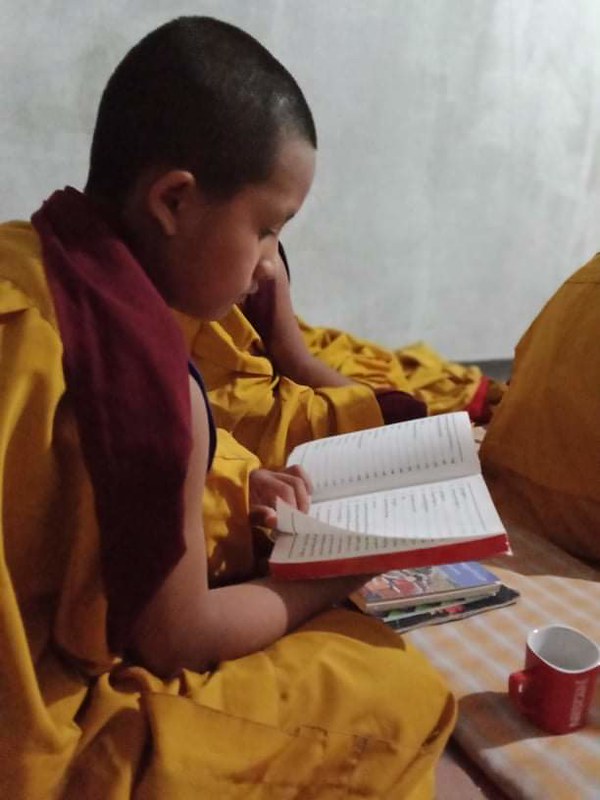
2021.02.27 Day 10: Karmapa Deshin Shekpa, Karmapa Mikyö Dorje and China


Day 5: Mikyö Dorje’s Second Good Deed

Jacek Rosa 2021 Arya Kshema 02 September 2026

Arya Kshema Spring Dharma Teachings:
17th Gyalwang Karmapa on 
The Life of the Eighth Karmapa Mikyö  Dorje

February 20, 2021

His Holiness the Karmapa started today’s teachings by sending his greetings to Bokhar Khen Rinpoche, whom he saw in the audience yesterday, as well as to the Khenpos and Geshes, the nuns of the shedras, foremost among the sangha, as well as all the Dharma friends who were watching over the webcast.

Referring to what he had mentioned the day before, he explained that although he had planned to speak about Mikyö Dorje’s birthplace and birth region, he decided that it would be much better to say as much as he could at the respective time rather than trying to push through, thinking, “I have to say this, I have to say that, I have to teach this today and that tomorrow”… Thus, although he had prepared a schedule accordingly, he found that to follow such a schedule did not really work.

Following his initial remarks, the Karmapa then turned towards the second verse of Mikyö Dorje’s autobiographical text, Good Deeds:

Without disdaining inauthentic gurus and companions
Or following them along the paths they taught,
I did all I could to overcome the thoughts of the three poisons—
Impediments to reaching the dharma’s culmination. 

I think of this as one of my good deeds. 

His Holiness explained that the topic of the second good deed is inauthentic gurus and companions and refraining from following the paths they taught. He reminded us briefly of the first of Mikyö Dorje’s good deeds, which describes how Mikyö Dorje entered the teachings and began to practice the dharma.Once we have entered the dharma, His Holiness commented, there are many impediments and harmful conditions, and if one were to follow negative friends, then many difficulties would arise. Mikyö Dorje’s second good deed, therefore, relates how he overcame impediments to practicing the dharma, such as negative friends. 

However, Mikyö Dorje did so many amazing things that people could see; they immediately felt great faith and respect for him as the reincarnation of the Karmapa. Furthermore, Situ Tashi Paljor looked at the testament left by the Seventh Karmapa and, to a great degree, accepted that Mikyö Dorje was the Karmapa and instructed people to respect him as the tulku. Unfortunately, Situ Tashi Paljor passed away soon after the Karmapa was born and was unable to continue working towards his recognition as the tulku.  

Then Mikyö Dorje went to Riwoche, where the master of Riwoche, Jigten Wangchuk, showed him great respect and said that there was no mistake in recognizing him as the reincarnation of the Karmapa. As Jigten Wangchuk was the leader of the Lhorong community there at that time, he told the people Mikyö Dorje was the reincarnation of the Karmapa and that they needed to take great care of him. The Lhorong community accepted this and agreed. They invited Mikyö Dorje to Lhorong monastery and promised that they would provide well for him in terms of food and clothing.

In an autobiographical liberation story of Mikyö Dorje’s, written when he was at Namtrö mountain, he related how the people of Lhorong failed to keep their promise. Instead, when he reached Lhorong, they treated him like a lowly herdsman,  someone who looks after donkeys, horses or dogs. They did not give him more than to such a person. Also,  the Garchen had supported the claim of the western tulku, and so there was doubt whether Mikyö Dorje was the true reincarnation of the Seventh Karmapa Chödrak Gyatso. Consequently, they failed to take care of him. Until he reached the age of seven, he and his entire family were reduced to living as beggars in the region of Lhorong. Thus, before he was recognized as the Karmapa, he faced great difficulties, lacking basic necessities such as food and clothing.

Even though Mikyö Dorje displayed so many wondrous signs, they did not recognize him but instead listened to the audacious Amdo lama and took care of the western tulku, and were about to recognize him as the reincarnation of Chödrak Gyatso.                          

His Holiness explained that these situations arose because the people in the Garchen did not listen to the regent Gyaltsap Tashi Namgyal, even though he had been appointed by the Seventh Karmapa and held the highest rank in the Garchen. During the time of the Seventh Karmapa very strict rules were enforced in the encampment; beer and meat were forbidden inside the encampment, and women could only enter during the daytime and were not allowed to stay overnight. However, after Chödrak Gyatso passed away, people began to disregard these rules. In addition, there was much criticism of Gyaltsap Rinpoche. He was even accused of causing the death by poisoning of a monk called Tashi Döndrup from Karma Gön Monastery. Finally, it was made too difficult for him to stay in the Garchen and he went to Jang.                                                                             

The Seventh Karmapa had many great students but the Garchen monks had no respect for them. Sangye Nyenpa Rinpoche, for example, who later become one of the most important teachers of Mikyö Dorje, was vilified as a bad person and a charlatan. He had no power or influence in the Garchen. The monks had a modicum of faith in Chöje Karma Trinleypa, who was well-versed in both dharma and politics, but they did not give him the chance to come to the encampment to give them his advice or guidance. As for appointing a tutor for Mikyö Dorje, it should have been someone suitable and worthy of being his tutor, such as Shamar Chökyi Drakpa, but the people in the encampment accused Chökyi Drakpa of breaking samaya with the previous Karmapa, and warned that if his shadow were to fall on anyone, they would go to hell. Even when Mikyö Dorje invited Shamar Chökyi Drakpa to the encampment, the people would not even allow them to meet. The main reason they thought so badly of Shamar Rinpoche was that he had become quite powerful politically and religiously, so the members of the encampment envied him.                                                                    

The leaders of the encampment decided that Drom Tashi Döndrup would be the best tutor for Mikyö  Dorje, but on his way to the encampment, just before he arrived, he vomited blood and died. He was the custodian of the Seventh Karmapa’s sacred objects, and when he died, his wife and servants appropriated them. 

His Holiness reiterated that these problems were caused by the deterioration of conduct in the encampment. The monks didn’t keep the monastic rules and didn’t even wear robes. 

After Chödrak Gyatso passed away, the Garchen should have erected a stupa for his relics. But when Chödrak Gyatso’s remains were cremated, a miracle happened and there was an image of Avalokiteshvara in each of his vertebrae.  Eventually, they were placed in a stupa. However, as Mikyö Dorje remonstrated, from the start they should have been placed where everyone could see them, but they were not. Consequently,  nobody was taking proper care of all the sacred objects and relics and nobody was making offerings; it was really a very bad situation. 

Later, when Gyaltsap Rinpoche returned from Jang, he built a reliquary for the remains of Chödrak Gyatso and recognized Mikyö Dorje, the eastern tulku, as the Karmapa. This turned out well until Gyaltsap Rinpoche suddenly fell ill and passed away. Not only that, nobody took care of his remains properly; they were buried in sand. Later, there were many ringsel the size of mustard seeds.  His Holiness suggested they might have buried him in sand because they thought that he had been poisoned.

Such really depressing, revolting situations, His Holiness continued, are not mentioned in many liberation stories. However, Mikyö Dorje later wrote a letter, criticizing and scolding the people in the encampment and explaining these events in great detail. This letter is no longer extant but we know of its existence from the namthar of Six Kamtsang Gurus and Students written by Ne Gowa Karma Shenpen Gyatso at the time of the 13th Karmapa. Likewise, the Fifth Dalai Lama’s autobiography briefly mentions that these events happened.  Sangye Paldrup also describes many similar events in his commentary on the Good Deeds.                                 

The Vajra Vidya library published an edition of the Good Deeds based on a manuscript from Drepung Monastery library. When the Good Deeds were being translated into English and Chinese and proofread [prior to this teaching], His Holiness fortuitously found another old manuscript of the Good Deeds. By comparing these two editions, in which sometimes a couple of lines or pages were different, it was possible to fill in missing sections. Sangye Paldrup’s commentary is particularly important because it was reviewed by Mikyö Dorje himself, who told him what should be deleted and what needed to be added.

Next, His Holiness described incidents that illustrate how Mikyö Dorje was not in the least influenced by negative friends. For example, in the recently discovered edition it says that when Mikyö Dorje was young, most of his attendants would use a ganachakra offering as an excuse to eat an entire sheep. Mikyö Dorje forbade them from doing this; he maintained that eating these weak animals while calling it a ganachakra had no benefit and was dangerous. 

Another time a brick of tea went missing. The monks seized a suspect and put him in the encampment prison. The attendants then threatened Mikyö Dorje and pressurized him to pretend that his clairvoyance confirmed that this man was the thief. Knowing that the man was innocent, Mikyö Dorje refused to lie, whatever the attendants threatened to do to him.  

Later, his attendants suggested that Mikyö Dorje act in certain ways in order to acquire things from people, but he refused because it constituted breaking the precepts; it was taking what is not given. If people had faith and offered things, that was fine. He was not influenced by the negative friends around him but stood on his own two feet. 

People would tell him to wage war on others or to cast a spell on them. Mikyö Dorje said he did not know how to do it. 

During the Mahakala puja, the monks would bring meat and beer, claiming that they were offerings to Bernakchen. They would then eat and drink as much as they could. In response, Mikyö  Dorje explained that the important thing was to act in accord with faith and samaya. If one practiced in the correct manner, things would be fine, but if one were to engage in negative deeds while requesting the support of the dharma protectors, they would become misdeed protectors,  and in the end, the ruin would fall on oneself. So Mikyö  Dorje said it was better to stop the practices entirely rather than committing unvirtuous acts and harming sentient beings. 

People advised him on how to behave, arguing it was the tradition of the Karmapas. Later Mikyö Dorje said that,  from his childhood, many people had come to teach him the eight worldly concerns. He could have followed their advice, but because this human life is just momentary, he would rather spend his time practicing dharma. Thus, he chose to practice the dharma, gave up non-dharmic actions, and advised people to do likewise. 

At the same time, he showed equanimity towards evil people and said that he had unbearable compassion for them. Mikyö Dorje’s character was such that when he actually saw or heard of people’s suffering or that they were doing non-virtuous actions, he could not bear it and it made him sick to merely think about it. Nor could he bear the way in which the attendants in his retinue would criticize each other, or the dharma practitioners would try to point out each other’s faults. People would criticize the great masters too.

In the twenty-one volumes of his collected works, Mikyö Dorje sometimes refutes scholars from other lineages, Karma Kagyu scholars, and even his tutors Karma Trinleypa and Tashi Öser. He used his own intelligence to get to the heart of the matter. It didn’t matter which tradition the scholar belonged to. He used logic to test everything. Irrespective of tradition, if it was logical, Mikyö Dorje would approve it. If it was illogical, he would refute it, even if it was from his own tradition. People did not understand this and he was criticized, in particular for refuting the secret mantra Nyingma tradition. 

But this does not mean that he lacked faith in the masters of other traditions. For instance, he composed a praise of five great beings who had written the great treatizes: Sakya Pandita, Jonang Kunkhyen (Dolpo Sangye), Omniscient Butön, Bodong Panchen, and Je Tsongkhapa.

The Karmapa recounted how one time, when he had gone to see His Holiness the Dalai Lama, they had spoken about Mikyö Dorje’s praise of Tsongkhapa. In that praise Mikyö Dorje said it was very well-known and undisputed in Tibet that Tsongkhapa spread the teachings of the vinaya throughout Tibet. And although Mikyö Dorje occasionally made refutations of Tsongkhapa, he wrote praises of him too.

The  Karmapa then shared the praise which he finds most evocative. It comes from the Collected Songs of Mikyö Dorje and is what is called in Tibetan a gur, a type of song which primarily describes feelings and experiences .

It begins: 

In the snow land of Tibet,
When people merely wear the robes of the vinaya,
The one called Lord Lobsang Drakpa
Took the ways of the Bhagavan Shakyamuni,
And innumerable monks, wearing the saffron colored banner,
With conduct like Shariputra
Filled the world.
If you do not have faith in this lord, who do you have faith in?

In this praise, Mikyö Dorje makes a supplication and confession to Je Tsongkhapa, Lobsang Drakpa. At a time when people did not heed the Vinaya teachings, Tsongkhapa was like Buddha Shakyamuni actually appearing in the world. He upheld the teachings of the Vinaya. Moreover, he had many students who were like Shariputra and Maudgalayana and they “filled the world” i.e. the land of Tibet. Then, Mikyö Dorje is asking, if one has no faith in someone like Lord Tsongkhapa, then whom does one have faith in?

People who had been partisan maligned him.
I had been caught by harmful friends
And confess my wrongs done from ignorance.
Please look after me in all my lives. 

His Holiness filled in the background drawing on his own experience.  There was a long-standing tradition of rivalry between the Kagyupas and Gelugpas, which was exacerbated when the armies of the Mongol Gushri Khan attacked the Karma Kagyu at the time of the Fifth Dalai Lama and the 10th Karmapa. The Karmapa recounted how, when he was young, a thangka of the thirty-five confession buddhas hung on the wall at the back of his room, and Je Tsongkhapa was depicted at the top of this thangka. His attendant said that this was not good, so he covered the part which showed Tsongkhapa. However, His Holiness continued, from the time he was young, he had had special faith in Je Tsongkhapa and also some affection for the Fifth Dalai Lama, as the latter had written a poetry text which the young Karmapa had studied. He appreciated the Fifth Dalai Lama’s writing but felt somewhat strange when the Fifth Dalai Lama criticized the Kagyu. 

The next verses praise:

  • Bodong Rinpoche, Chokle Namgyal, who was an incredible scholar. His collected works contain over a hundred volumes. They include works on how to read the alphabet all the way through to Kalachakra tantra. There are excellent works on sutra, tantra and other fields of knowledge. He had about fifteen secretaries, who could write a great amount of texts in a short time.

  • Je Ngorchen, who was one of the three great tantric practitioners. At that time in Tibet, ganachakraswere used as an opportunity to kill animals in order to eat their flesh and to drink alcohol. Je Ngorchen asserted the moral conduct which accords with the practice of secret mantra, including abstention from killing.
  • Je Rongchen Shakya Gyaltsenwho is very important in our philosophical tradition. His explanation of difficult texts ‘shone like the sun’ and he had a great influence on Mikyö  Dorje when the latter was writing texts on sutra and tantra.

The summary at the end of this praise is very important. [What follows is a rough translation.]

Now innumerable beings uphold the precious teachings of the Buddha, 
and the realm of the fortunate aeon flourishes. 
The supreme refuge rare in the world, the jewel of the sangha covers the earth, 
so joy is equal to space. 

His Holiness explained that the “precious teachings of the Buddha” is inclusive of all traditions of Buddhism, not just Tibetan Buddhism, though here Mikyö Dorje is referring primarily to Tibetan traditions. The teachings spread and flourish because of the kindness of the masters from all lineages, as does “the jewel of the sangha”. This is a source of joy.

Instead of being envious 
that other dharma lineages flourished in the path, 
there is no way but to be caught up 
by the horse of regret. 
I feel such great regret that I dare be like this.
It is intolerable, so I confess. 

In the past, Mikyö  Dorje confesses he may have felt envious when he heard of the success of other lineages but now he deeply regrets that.

Though I feel intense regret now, 
until my awareness is clear in an isolated place
and I am filled with the light of devotion 
for the undisputed Kagyu mahasiddhas
such as Sangye Nyenpa, I will supplicate fervently.
I understand this is authentic blessing.

His mind had become clear while he was in retreat. Now he feels such intense regret that he is driven to confess. He feels great devotion for the Kagyu mahasiddhas and realizes that this strong regret is an authentic blessing. 

If you think you follow me, 
do not make dharma lineages into me and you. 
It is fine for the Buddha’s teachings to spread.
Do not think with bias
that your own friends should flourish. 
May the worry about teachings of all lineages
burn intolerably as the wind in the heart. 

This advice is for those who consider themselves his students. Our concern should be for all lineages to flourish, not just for our own lineage. And this concern should burn intolerably in our hearts. His Holiness emphasized that we need to have a much wider perspective because the entire framework of the Buddha’s teachings needs to survive. If the teachings were to disappear, there would be no Tibetan Buddhism and no Kagyupa either. When Buddhism divides into factions, we see others’ teachings as  a fault, they see our teachings as a fault, and this creates great danger to the teachings themselves.

Mikyö Dorje was a great lama of wisdom and power; however, he himself said he was just an ordinary person, and admitted to feeling anger and jealousy in the past.  Subsequently he developed regret. Very few teachers mention in their autobiographies that in the past  they had afflictions such as desire, hatred or envy. Or that they felt regret for doing so. In contrast,  Mikyö Dorje spoke very clearly and forthrightly and made his intentions very clear; if we want to follow him, I, is in our hands.     

 In brief, Mikyö Dorje always thought about other sentient beings and worried about them; because of that, he became very thin and did not sleep well, due to which his body became very weak. When we look at paintings of Mikyö Dorje, we can see that his cheeks look very hollow. His attendants and others tried to persuade him to commit misdeeds but he maintained his equanimity towards them. He was also humble. Of his own experience, he commented that the times were degenerate. There were people who pretended to be monastics whose conduct was even worse than that of lay people. They were not tainted by even a whiff of the dharma, yet they enjoyed the offerings to the Three Jewels with abandon.  He did not adopt their behaviour, neither did he criticize or scold them, but stayed in a state of equanimity and worked even harder for their sake. He was never apart from enjoying the true Dharma, which he considered one of the best things he had done.               

He studied diligently and focused carefully on his work. If thoughts of the eight worldly dharmas occurred, he paid them no attention. Before he went to bed, he would pick up his mala and count all his good and bad thoughts that day. Then he would count the good and bad words, he had uttered; he happily dedicated all the virtue for the benefit of sentient beings and confessed the unvirtuous actions, promising never to repeat them again.

 Mikyö  Dorje was surrounded by many different types of people, not only monks but laypeople. Consequently, some were critical and opined that he should surround himself with scholars and meditators, increasing his status and bringing in more offerings. 

One story tells of a visit from Lama Shab-Jenpa. He scolded  Mikyö  Dorje saying, “Of all the incarnations of the Karmapas, you are the one who has done the most harm to the Kagyu teachings.” Lama Shab-Jenpa claimed that if he were to take the Karmapa’s place,  it would only take him a minute to gather 5000 bhikshus. In Kham, he boasted, he had 500 good monks who wore the dharma robes properly and abstained from drinking alcohol, whereas the Karmapa was surrounded by people who drank beer.   Mikyö  Dorje replied, “I prostrate to those who are able to gather a retinue of those who have the three robes and the three trainings, and gather as many sangha as Tsongkhapa.” Later,  Mikyö  Dorje said that Lama Shab-Jenpa was not an authentic spiritual teacher. It was reminiscent of the tale of the lion. Many people thought that they could kill the lion easily but they were unable to get close to him. However, the lion had a weak spot– it never hurt anyone wearing dharma robes, so they put on monastic robes.

 Mikyö  Dorje would never say that he was in meditative equipoise and should not be disturbed. Every day, he would memorize texts, make tsatsas, meditate, do yogic breathing exercises and practice as an authentic vajra master. Yet, being very humble, he never displayed this to others. Where he mainly put his effort was in teaching the Dharma and explaining philosophy to others. Many people at that time said that Mikyö Dorje was really lazy and, because they thought he was not doing practice or giving empowerments, they claimed that he was harming the teachings.      

In any case, His Holiness concluded, Mikyö Dorje went through many difficulties in his life, particularly when he was young, which for people like us, would be really difficult to bear. It was important to realize how high a vision Mikyö Dorje had. Because of his efforts, he  is one of the greatest among all the incarnations of the Karmapas, one who really stands out.

During the last part of the teachings His Holiness briefly related some of the difficulties he had faced in his life. The first seven years of his life were the happiest, because he had no responsibilities; he was with his parents and described his home as a very beautiful place. Then, from the age of seven, he was recognized as the Karmapa. People think of  this as a very high position. They  assume that as someone in such a position, he would get very good food and clothes, and that his attendants would obey his orders immediately. But that, His Holiness confirmed, is not how it is.

He gave some examples.  After His Holiness was brought to Tshurpu monastery, people made offerings to him, which were then taken by the people behind him. For example, there were people he knew from Taiwan who came. They were aware that the steward would usually take any money they offered to the Karmapa. Thus, secretly, they would secrete offering envelopes under the carpet for His Holiness to retrieve and give to his parents later. But the steward found this out, and when His Holiness had to leave his quarters to attend a puja, the attendants would search his room and remove any gifts they found. If they were challenged, they would claim that they needed to check for poison. These items were never returned.

On another occasion, His Holiness was asked to recognize the reincarnation of Pawo Rinpoche, and the director of Nenang  monastery made an offering to him of a chain with a large golden buddha. A day later, the same lama asked His Holiness why the steward was wearing the golden buddha round his neck. Not only that, the steward even told others to take a look at it, saying, “Doesn’t it look beautiful?” 

His Holiness continued. The tradition was for the monastery of a tulku to offer his parents a house but they failed to do this, and the young Karmapa  was hardly able to see his family because his mother and  sisters were not permitted to visit him at Tshurpu monastery. Finally, his father reached the end of his tether, and confronted the labrang officials: “We do not need many offerings; we just want to see our child when we want to and that his siblings can meet him. If you do not like that, then I will take my son with me and go!” Upon which the officials became worried. They agreed to family visits and gave His Holiness’s parents lots of new clothes.

When he was a little boy, the steward bullied him too, hurt him physically and reduced him to tears.

Approaching the end of the teachings, His Holiness reminded us of the difficulties the Eighth Karmapa Mikyö Dorje faced, particularly when he was young. To begin with, there was the controversy over the western and eastern tulku, and not only did he have to live in that environment, but he also had to perform the activities of the Karmapa. 

For that reason, what we need to think is —though Mikyö Dorje was probably an emanation of a buddha or bodhisattva, though we cannot know for sure— as an ordinary human being he faced a lot of difficulties. We should remember what he did for the benefit of sentient beings and the teachings. That is why we should consider him so important and identify that really clearly. Only then will we ourselves get some real confidence in this lifetime and feel that we can do something on behalf of the teachings and sentient beings.


Click the photo to view photo album:

2021.02.20 Day 5: Mikyö Dorje’s Second Good Deed


Day 6: Ascertaining the True Dharma and Favorable Conditions for Following Authentic Gurus

Jacek Rosa 2021 Arya Kshema 02 September 2026

Arya Kshema Spring Dharma Teachings:
17th Gyalwang Karmapa on The Life of the Eighth Karmapa Mikyö Dorje 

February 21, 2021

Part 1: Discarding the Husk

His Holiness began the sixth day of teachings by offering a warm welcome, reminding us that we all have this opportunity to enjoy the true dharma together. The organizers of the Arya Kshema requested these teachings for all the nunneries; the shedras are participating as well. His Holiness emphasized we can still speak as if we are in each other’s presence in spite of the difficulty of the pandemic and our inability to gather together in-person. In fact, these teachings are most important because they offer the opportunity for many to listen to Mikyö Dorje’s liberation story in ways we may have never dreamed of previously. 

For any student of Kagyu philosophy, hearing Mikyö Dorje’s liberation story is of utmost importance because we learn about his character and beneficial actions. As we come to know what he taught, we can develop and feel real faith. 

Through a series of slides, complete with detailed names, dates, and images, His Holiness drew our attention to Mikyö Dorje’s birth in a village two hours from Changdu City, on the 4th day of the 11th lunar month of the Female Fire Hare, 1507 in the Western calendar. He explained that Gyaltsap Tashi Namgyal gave Mikyö Dorje the monastic name Chökyap Drakpa Pal Sangpo. 

Additionally, His Holiness showed vivid images of a memorial stupa for Mikyö Dorje, a tree planted in the year of his birth, and tree bark said to have been used for wrapping his mother’s body after she passed away. Additional images included ruins of a house built in his mother’s memory as well as two images of Mikyö Dorje’s footprints.

Then, Gyalwang Karmapa turned to the second stanza of The Praise “He Searched Thoroughly…”.

Seeing that those who try to make pseudodharma
Of the disobedient and naturally unwholesome
Into true dharma remain outside, like a husk,
He taught the fine meaning well—to him I pray.

According to the Fifth Shamar Könchok Yenlak, the topic of this stanza is, “How he abandoned the impediments to the teachings himself and also got others to do so.” His Holiness further clarified the meaning of the stanza: “When we are practicing the Dharma, it is really important for us to know the dividing line between Dharma and non-Dharma.”  In order to recognize this, we need to ascertain in our mind what should be taken up as dharma or discarded as non-Dharma. Not only do we need to understand this meaning, but also it must be put into practice. Only if we are able to put it into practice, can we be counted as a pure Dharma practitioner, and, to actually apply it, primarily depends on our strong longing and determination.

For the path of the Hearers and the Pratyekabuddhas to take root in our being, we absolutely need the intention of achieving Nirvana. We must set aside things that get in the way such as wishes for fame, respect, and material goods. For the Mahayana path to take root in our being, we should consider others as more important than ourselves. Often, however, we take pleasure in an adversary’s suffering. When doing tantric practice, we should meditate on the entire world as a pure realm and all the beings who inhabit it. Yet, everything appears as an enemy or something we dislike. 

His Holiness elaborated further on the last two lines of the stanza. He noted that when we do not know what we should do and what we should give up, we confuse the practices of the three vows. We are taught we should discard the disobedient and unwholesome actions; however, we do the opposite, and put them into practice. Even though we are not actually Dharma practitioners,  on the outside we look as if we are. We act as if we are, but Mikyö Dorje said this was pointless. It is like the husk which needs to be discarded and not something to keep. 

Mikyö Dorje taught the unmistaken path of the meaning to others; and so we pray to him because he taught this meaning so well. For instance, Lord Tsongkhapa wrote in his Summary of the Stages of the Path: 

I, a yogi, practice like that. 
You who want liberation, do the same. 

Later this was modified slightly:

The jetsun gurus practice like that. 
You who want liberation, do the same. 

Similarly, we need to practice just as the venerable gurus. When we read The Praise “He Searched Thoroughly…”, we must think about practice as we recite these prayers. 

Part 2: Meeting the Authentic Gurus

Through the autobiography Good Deeds, His Holiness drew our attention to Mikyö Dorje’s authentic gurus. First, His Holiness read the third good deed:

When I saw that the Mahayana masters were unmistaken,
I became captivated by their excellent qualities
And acted in harmony with all of their august examples.
The great beings therefore granted me their blessings with delight. 
I think of this as one of my good deeds. 

According to Sangye Paldrup’s Commentary, The Bright Lamp, this third good deed is the third section on, “the favorable conditions following great spiritual friends.”

There is also another text Mikyö Dorje composed called Past Deeds of Mikyö Dorje where he describes how he met spiritual friends and made connections:

I met the great being, the Nyewo Goshri Tulku Tashi Namgyal, an emanation of Milarepa’s disciple Shiwa Ö and of the bodhisattva Paljor Döndrup. He gave me the Mahayana fasting vows and empowerments, blessings, and pith instructions including Bhagavan Gyalwa Gyatso, Vajravarahi, Mahakala Bernakchen. I esteemed him highly with unbreakable respect and made him the object for gathering merit and confessing misdeeds. 

Then, His Holiness taught the brief biographies of Mikyö Dorje’s principal teachers, including the Second Gyaltsap Tashi Namgyal and Sangye Nyenpa Rinpoche, also known as Denma Druptop. 

Gyaltsap Tulku Tashi Namgyal’s Short Biography

His Holiness went on to give a brief biography of Mikyö Dorje’s first guru, the Second Gyaltsap, Tashi Namgyal. He was born in Nyemo valley in Central Tibet in the Fire Sheep year  [1487 CE]. The Seventh Karmapa Chödrak Gyatso recognized him as the reincarnation of Goshri Paljor Döndrup. In the Water Pig year of 1503, as Guru Rinpoche had prophesized,  Chödrak Gyatso gave him a red crown with a golden blaze, consecrated with the essence of speech of the Vajra Amitabha Lama Gongdü practice. This is the origin of Gyaltsap Tashi Namgyal wearing the orange-colored crown.

During the time of the Seventh Karmapa, Gyaltsap Tashi Namgyal received empowerments, transmissions, and so forth from the Goshri tulku, Drung Situpa and his brother, Drongbu Goshri. Additionally, he received instructions and monastic ordination from the tradition of Je Kyasé. Gyaltsap Tashi Namgyal received transmissions from all the different lineages in Tibet, and after Seventh Karmapa Chödrak Gyatso passed away, he became the regent and received the title, Gyaltsap meaning, the tulku’s regent. He built a golden stupa for the remains of the Seventh Karmapa Chödrak Gyatso. Then he recognized and enthroned the Eighth Karmapa. He passed away in the Wood Pig year [1515 CE] at the age of 29. 

Then His Holiness shared how Mikyö Dorje met Gyaltsap Tashi Namgyal in on the 11th day of the 2nd lunar month of the Year of the Bird (1513) when he was enthroned as the Eighth Karmapa. 

On the 3rd day of the 4th lunar month of 1513, Mikyö Dorje took the Mahayana fasting vows from Gyaltsap Rinpoche and was given the name Chökyap Drakpa Pal Sangpo. On the 3rd day of the 8th lunar month in that same year Gyaltsap Rinpoche gave him the monastic vows. 

In summary, Mikyö Dorje considered Gyaltsap Tashi Namgyal extremely kind to him. Not only that, he also treated Gyaltsap Tashi Namgyal’s reincarnation very respectfully as evidenced in several texts. For instance, Pawo Rinpoche’s history of Dharma: A Feast for Scholars says:

He thought of Shamar Könchok Yenlak, the nirmanakaya of the fourth holder of the Shamar crown, and Drakpa Paljor, the tulku of Gyaltsap Rinpoche, as his actual lamas. He did not think of them otherwise, as students. 

He considered the Fifth Shamar and the Third Gyaltsap’s reincarnations as his actual gurus. This is also clearly described in Mikyö Dorje’s autobiography:

After that, I approached the nirmanakaya of the lord himself, great Avadhūtīpa Drakpa Paljor. Though I did not actually make offerings with body and speech, mentally I took him as worthy of prostrations and respect, and did as much accumulation and purification as I could, as fit my mind.

The break fell at this point., and the audio transformed into the beautiful chanting of the nuns of Karma Drupdey Palmo Chokyi Dingkhang.

The teaching resumed and His Holiness gave a short biography of Mikyö Dorje’s most important guru, Sangye Nyenpa Druptop. 

Sangye Nyenpa Denma Druptop’s Biography

Among all the gurus he followed, Mikyö Dorje had the most faith in Sangye Nyenpa. The first Sangye Nyenpa was called Denma Druptop. From the age of ten, Mikyö Dorje followed him as his most influential guru. 

His Holiness described Sangye Nyenpa’s early life. He was born sometime during the 1440s in the valley of Denma in Kham. He was a descendent of the Lord of Denma. When he was young and first heard the name Karmapa, he had goose bumps, shed tears, and could not eat nor sleep. When he was six years old, his parents brought him to have an audience with the Seventh Karmapa. Immediately upon meeting, it was like a father and son uniting and they had a feeling for each other unlike any other. At that time, the Seventh Karmapa gave him the name Tashi Paljor. At the age of 8, he went forth as a monk under Bengar Jampal Sangpo and Paljor Döndrup. From the age of nine until 16, he studied the five dharmas of Maitreya, Nagarjuna’s Collection of Logic, and other teachings of sutra and tantra. Having studied and read philosophy, he thought he also needed to practice. He needed to follow a guru and receive pith instructions. 

His Holiness focused on some important aspects of Sangye Nyenpa’s aspiration to practice the dharma fully. Sangye Nyenpa went to the Seventh Karmapa Chödrak Gyatso and made the request to practice. When the Seventh Karmapa agreed, Sangye Nyenpa never separated from him for a moment. For that reason, he only subsisted on food scraps and received the nickname Nyenpa Ngökyok meaning “Gnarled Blue Nyenpa.” By the age of 23, he had received many instructions and decided to devote himself one-pointedly to practice. With the Seventh Karmapa’s blessing, he went to areas of Kham and then to Central Tibet. He practiced three years in Kampo Nenang, two years in Pangpuk, two years at Tsurphu, and one year in retreat at Tanglha. For eight years, he did not start a fire or eat any hot food. He only lived on chü-len or  “extracting the essence” – a practice of visualizing external objects as food and visualizing eating them and receiving their nourishment.

Additionally, he never took any allowance. He only ate leftover scraps from tormas and drank leftover tea leaves. Other than speaking with his gurus, he maintained a vow of silence. Then, the Seventh Karmapa sent Ser Jadralwa Gendun Gyaltsen to accompany Sangye Nyenpa and both lived on chü-len. They spent five years at Namtso. Then they went to Nomtang in Mön, Drowolung  Sangpo, and Shampo Gang, practicing a year in each respective place. At the age of 40, he wished to go to Uddiyana. He wanted to test his friend to see if he would join him. To do so, he asked him if he wanted to go to Shambhala in the north. His friend responded, “How can we go to places that Menlung Guru and Druptop Orgyenpa, teacher of the Third Karmapa, could not even reach?” Instead, if you have enough confidence, let’s try to go to Uddiyana in the west. While they were preparing to go to Uddiyana,  Ser Jadralwa suddenly passed away, so Sangye Nyenpa abandoned the plan.

His Holiness also described many of Sangye Nyenpa’s miraculous activities and how he received the name Nyenpa Druptop, or Nyenpa Mahasiddha. At one time, Sangye Nyenpa dreamed of his birth mother and felt a great wish to see her. When he asked the Seventh Karmapa about this, the Karmapa urged Sangye Nyenpa to return to his homeland. However, before departing, Sangye Nyenpa realized that his mother had already passed away but was reborn as a dakini. Sangye Nyenpa had a vision that she was living in a terrestrial state and wanted to dwell in the sky. He understood she had requested the Chakrasamvara empowerment from him. Through his samadhi, he was able to give her this empowerment. 

His Holiness gave another example of the numerous ways Sangye Nyenpa benefited beings. When there was a war between Sangye Nyenpa’s homeland of Denma and Adro, someone from Amdo killed one of his brothers. This adversary also set out to Central Tibet to kill Sangye Nyenpa. At that time, Sangye Nyenpa was living as a yogi in a cave. When his enemies reached the cave they found that Sangye Nyenpa only had a bit of dry grass, he was emaciated, and his robes were in tatters. Upon seeing him, their hatred immediately subsided and they felt overcome with faith. Once they had felt faith, the people from both Denma and Adro requested his help in resolving their conflict. However, Sangye Nyenpa did not want to engage in such worldly activities. 

The Seventh Karmapa sent Sangye Nyenpa a letter asking him to build a monastery to benefit beings. Sangye Nyenpa, however, thought that he lacked the qualities to achieve this. He thought that maybe the Seventh Karmapa was trying to test the level of his realization. So, Sangye Nyenpa replied that he was unable to build a monastery. Once again, a letter arrived, ordering him to build a monastery. Sangye Nyenpa knew to follow the guru’s demands. He returned to Denma and resolved the dispute with Adro. 

He then built a monastery at Urgyen Mountain Retreat and taught many of the people who had killed his brother. When these former adversaries realized his unbiased impartiality, they developed great faith in him. Not only did he build a monastery, but many students gained accomplishment from that. 

All the preexisting monasteries of Denma, however, became jealous and worried that everyone would become a Kagyupa. When these monasteries went to take up weapons against Sangye Nyenpa’s institution, the others in the region stopped them from fighting. While some disputes still continued, Sangye Nyenpa’s monks mainly spent time in retreat. Not long after that, there was a strong earthquake that destroyed the adversarial monasteries. During this time, the retreat quarters also collapsed but not entirely. Sangye Nyenpa’s quarters were on the fourth floor but he escaped unharmed when the building collapsed. Afterwards, he was seen sitting atop one of the remaining two walls. People concluded that he had been saved by his miraculous powers and that he had flown up to safety. That’s how he got the name Nyenpa Druptop.

After this, he built a new monastery named Jangchup Ling at the base of the mountain. Not only that, he collected donations, restored damaged and destroyed monasteries and promoted harmony among all the monasteries in the region. Then the Seventh Karmapa encouraged him to leave Denma and build a monastery in lower Dokham. He went to many different places. If monasteries were in disrepair, he would restore them. Everywhere he went, he encouraged practitioners to practice virtue. 

He made many offerings to the Seventh Karmapa. In particular, he became the Eighth Karmapa’s guru and offered him all the empowerments and pith instructions. When he was 65, he had completed all his activities and he passed away at Karma Gön.  He had many different students. Nevertheless, he made the aspiration that all of his students would become Mikyö Dorje’s students. 

After this brief but extremely detailed biography of Sangye Nyenpa Druptop, His Holiness shared the story of how Mikyö Dorje met his guru. When Mikyö Dorje was four years old, the Seventh Karmapa’s sister, Wangmo Gawa, came to him and asked, “Who is your guru?” Mikyö Dorje replied, “Sangye Druptop.” So among all of his gurus, Sangye Nyenpa Druptop was the foremost. 

He met Sangye Nyenpa when he was nine years old. At that time, Mikyö Dorje made the aspiration to follow the guru, but he did not have the freedom to do so. The Fourth Shamar Chökyi Dragpa was the most appropriate to be his teacher, but Mikyö Dorje was in Kham and the Shamar was in Central Tibet. Since they were unable to meet, the Fourth Shamar concluded in a letter that Gyaltsap Rinpoche would be the most appropriate, but he had passed away. Thus, Sangye Nyenpa Denma Druptop became the worthiest teacher for Mikyö Dorje. 

Mikyö Dorje followed Sangye Nyenpa from the age of ten. During a short period of two years, he received all the transmissions and empowerments. Gyalwang Karmapa asked, “How did he do this?” Then he explained that as soon as the sun rose until it set, Mikyö Dorje spent every moment with his guru. He did not waste any time at all. This is described in the Past Deeds of Mikyö Dorje:

Then I touched the feet of Sangye Nyenpa Mahasiddha, the nirmanakaya of Jowo Smṛtijñāna, and took the novice vows. He gave me empowerments and blessings of the kriya tantra including Trisamayavyuha, empowerments and blessings of the carya tantra including Vajrapani, empowerments and blessings of the yoga tantra including Vajra Dhatveshvari, empowerments and blessings of the unexcelled yoga tantra including Kalachakra, and in particular the empowerments and blessings the ninth yana such as Strength of Awareness. In brief, he gave me the empowerments, instructions, and transmissions of the Ancient and New transmissions.

In particular, I received many instructions of what are known as the Nine Profound Cycles of Instructions of the Sa Kagyu, Joshal, Dakpo, Shangpa, Dzogchen, and so forth. I held him to be our highest object for accumulation and purification, and day and night, whenever I remembered, I took the four empowerments through the vajra yoga, never missing a day. 

Then, from the bodhisattva on the eighth level and great lord known as Tashi Öser, I received his kindness from the Vinaya up through Glorious Samaja. I took his liberation and comportment as a yidam deity and prayed to accumulate and purify as much as possible through view and conduct that follows those manners. 

His Holiness went on to clarify this quote. He explained that Mikyö Dorje never missed a day of teachings and he never considered himself to be equal to his guru nor his guru being an ordinary individual. Even when he went to bed at night, he would think about his guru’s teachings. In the morning, he would offer the mandala and the Seven Branch Prayer, envision his guru as Vajrasattva, and take the empowerments. “He would not just go and sit down like we take dharma teachings these days,” His Holiness commented.  

Mikyö Dorje ensured he was never apart from bodhicitta. He always thought about bringing benefit to countless sentient beings and took this into deepest consideration. During Dharma teachings he listened assiduously to retain the words; when contemplating he worked diligently to ascertain the meaning; and during meditation, he developed experience. He had a really strong interest and longing. No matter what, he could not bear to be apart from his guru. Mikyö Dorje nursed Sangye Nyenpa through an illness when we was unable to walk. Even though he was young, he served his guru and did whatever he could.

His Holiness explained how Sangye Nyenpa was pleased with Mikyö Dorje’s accomplishments. As Gyalwang Karmapa noted, Sangye Nyenpa said, “Karmapa, your actions are really in accord with the dharma. The dharma that I have been given is passed down from the great Kagyu forefathers and will bring great benefit to sentient beings. So, continue to behave and perform the actions and examples as you are doing now.”

Because his authentic guru had been pleased, all the blessings of body, speech, and mind in their entirety were transferred. This is common within the lineage from Tilopa teaching Naropa through Marpa to Milarepa. To actually see the guru as the Buddha is the profound point of devotion that was able to take root in Mikyö Dorje. Since Mikyö Dorje saw Sangye Nyenpa as his guru, he was able to consider others more important than himself. He developed faith in the guru and disgust for samsara. This is also from his autobiography: 

The mindstream of someone like myself is not workable, and I spend all my time with wrong views about dharma and individuals. I don’t see any qualities, but with the diligence and prajna of seeing if I can analyze the scriptures and with the understanding that this life has no meaning, I had a bit of renunciation of wishing to be in an isolated place not working for this life. Gaining a bit of understanding that beings have been my parents is solely due to the power of the compassion of my guru, the great Jetsun. When I look at his ability to tame people with mistaken minds such as myself, I cannot describe how much he appears to be only in the sphere of those with great fortune. For that reason, these days most people do not recognize qualities as qualities,  and put their hopes in false qualities.

For clarity, His Holiness summarized this passage. Even though Mikyö Dorje saw himself as having a wild character and fixed views, through the authentic guru, he was able to gain understanding and inspired renunciation. These only occurred because of the kindness of the guru. When Mikyö Dorje looked at his ability to tame people with mistaken minds, he understood Sangye Nyenpa’s life as the foremost example of Dharmic activities. Further, due to the authentic guru’s kindness, Mikyö Dorje became a great being, an authentic guru himself, whose name and meaning are in accord with all of the Dakpo Kagyu. 


Click the photo to view photo album:

2021.02.21 Day Six: Ascertaining the True Dharma and Favorable Conditions for Following Authentic Gurus


  1. Day 7: The Blessings of Many Authentic Gurus
  2. Day 2: Liberation Stories – Sources of Faith and Good Deeds
  3. Day 3: First Deeds of a Nirmanakaya
  4. Day 4: A Historical Examination of the First Eight Karmapa Reincarnations

Page 3 of 5

  • 1
  • 2
  • 3
  • 4
  • 5
  • Home